


Global Literacy Ecosystems

Building Sustainable Book Ecosystems Across Africa and Beyond
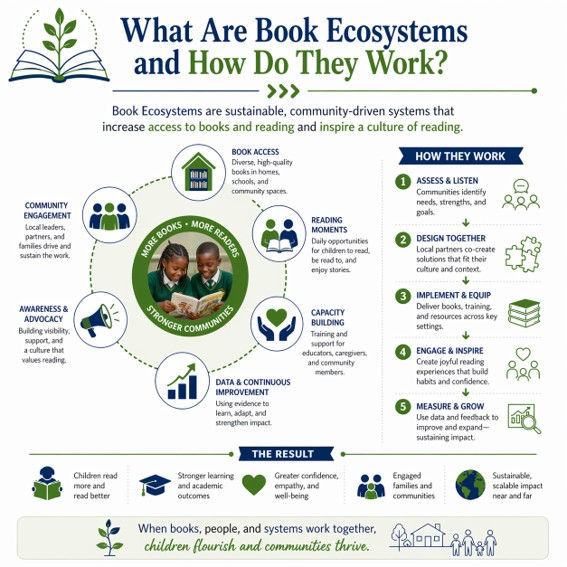
Soma Safari is a global literacy initiative focused on building sustainable, community-powered Book Ecosystems that increase access to books, strengthen reading culture, and improve early literacy outcomes for children.
Developed through research, community partnership, and international collaboration, the Book Ecosystem model works by embedding books directly into the places where children live, learn, and play — including homes, schools, libraries, and community spaces.
Our work is grounded in a simple but powerful belief:
When barriers to access, affordability, and cultural relevance are removed, children read more, families engage more, and communities grow stronger.

Our Global Mission
Our goal is to help children build home libraries and develop lifelong reading habits through sustainable literacy systems that are community-driven, culturally relevant, and scalable.
Current efforts focus on:
-
Early childhood literacy
-
Home library development
-
School and community book access
-
Little Free Library deployment
-
Librarian and educator training
-
Community-centered literacy infrastructure
-
Research and evaluation
-
International collaboration


Research-Based and Evidence-Driven
The Book Ecosystem model is built upon years of literacy and access research led by Dr. Anthony Chow and supported through implementation partnerships and federally funded literacy initiatives. The model originated through the Reading Nation Waterfall initiative and has since expanded internationally through Soma Safari.
Key research findings demonstrate that:
-
Increased access to books leads to increased reading frequency
-
Home libraries are strongly associated with literacy success
-
Culturally relevant books increase engagement and motivation to read
-
Community-driven systems create stronger long-term sustainability
The model specifically addresses three major barriers to literacy:
-
Access / Convenience
-
Affordability
-
Cultural Relevance


Measured Impact
As of 2026:
-
107,000+ books distributed globally
-
52,000 books delivered through the Kenya expansion
-
55,000 books distributed through Reading Nation Waterfall
-
1,500+ children reached across Kenya pilot ecosystems
-
60+ librarians and educators trained
-
18,826 books logged as read at home across participating communities
-
22,500+ school library visits reported at partner sites
Research and implementation findings have demonstrated:
-
Increased access to books
-
Growth in home libraries
-
Increased reading frequency
-
Greater family and community engagement
-
Stronger literacy readiness
-
Sustainable community ownership models


Strategic Partnerships
Soma Safari (a reading adventure in Swahili) works in collaboration with libraries, universities, literacy organizations, educators, nonprofits, and community leaders.
Current and supporting partners include:
-
San José State University School of Information
-
Kenya National Library Service (KNLS)
-
Knowledge Empowering Youth (KEY)
-
Books For Africa
-
Little Free Library
-
New Media Learning
Why Book Ecosystems Work
Traditional literacy approaches often focus on providing books in a single location. Book Ecosystems take a broader and more sustainable approach by connecting:
-
Homes
-
Schools
-
Libraries
-
Community spaces
-
Families
-
Educators
-
Local organizations
This creates literacy-rich environments where reading becomes a natural part of everyday life rather than an isolated activity. Book Ecosystems are:
-
Evidence-based
-
Community-driven
-
Scalable
-
Sustainable
-
Culturally grounded
-
Designed for long-term impact

Partnership Opportunities
We welcome collaboration with:
-
Ministries of Education
-
National library systems
-
Embassies and cultural officesNGOs and nonprofits
-
Universities and research institutions
-
Literacy and education organizations
-
Corporate and philanthropic partners
Potential collaboration areas include:
-
National literacy ecosystem pilots
-
Community library initiatives
-
Book distribution partnerships
-
Local librarian and educator training
-
Research and evaluation
-
Digital literacy and AI-supported learning initiatives
-
Cultural heritage and multilingual literacy projects
Average Cost of Shipping
Books for Africa has agreed to continue donating books for Kenya, Nigeria, and Ghana and the average cost of shipping from the United States to African countries is $11,500 for one container of approximately 52,000 children's books. The goals of our global book ecosystems is to ensure at least 25 books for each child 4-7 years old and over 100 books by third grade. The key is helping each child build their home libraries.

Current Expansion Goals
Following successful implementation efforts in Kenya, Ukraine, and tribal communities in the United States, Soma Safari is expanding collaborative partnership development in:
-
Nigeria (Books for Africa has donated 52,000 books but transportation costs must be raised)
-
Ghana (Books for Africa has donated 52,000 books but transportation costs must be raised)
-
Additional African and global communities including India and Polynesia
-
A national Books for Native Americans project for all tribes in the U.S.
The long-term vision is to support sustainable, locally driven literacy ecosystems that can be adapted to the unique cultural and educational needs of each participating community.
